
PROCEDURES

Carotid artery stenting
Overview
Carotid angioplasty and stenting are surgical techniques to open up congested carotid arteries, which help restore blood supply to the brain. One of the primary reasons for angioplasty and stenting is to improve blood flow, restore cognitive function and prevent stroke.
The carotid arteries, the primary arteries that supply oxygenated blood to the brain, run on both sides of the neck. These arteries are prone to blockage due to the accumulation of plaque that sticks to the walls and impairs blood flow to the brain. Doctors refer to the condition as carotid artery disease that, when neglected, can eventually lead to a stroke.
This technique entails temporarily placing and inflating a surgical balloon into the congested artery to dilate the region so that blood can flow to the brain smoothly. Carotid angioplasty is performed in conjunction with another procedure known as stenting. Stenting involves placing a stent, which is a tiny metal coil, into the obstructed artery. A stent keeps the carotid artery open, reducing its chances of constricting again. Cardiologists turn to angioplasty and stenting when a traditional carotid endarterectomy is too risky to perform.
Why it’s performed
Carotid angioplasty and stenting is an appropriate treatment or preventative stroke when:
- The blockage of plaque in the carotid artery is over 70 per cent, or you have stroke symptoms and cannot undergo traditional surgery due to a previous procedure such as radiation therapy after removing neck tumours.
- The carotid arteries narrow again (restenosis) even after carotid endarterectomy.
- The region of the carotid artery affected is challenging to access.
Critical carotid artery narrowing before and after stent placement done via the femoral artery
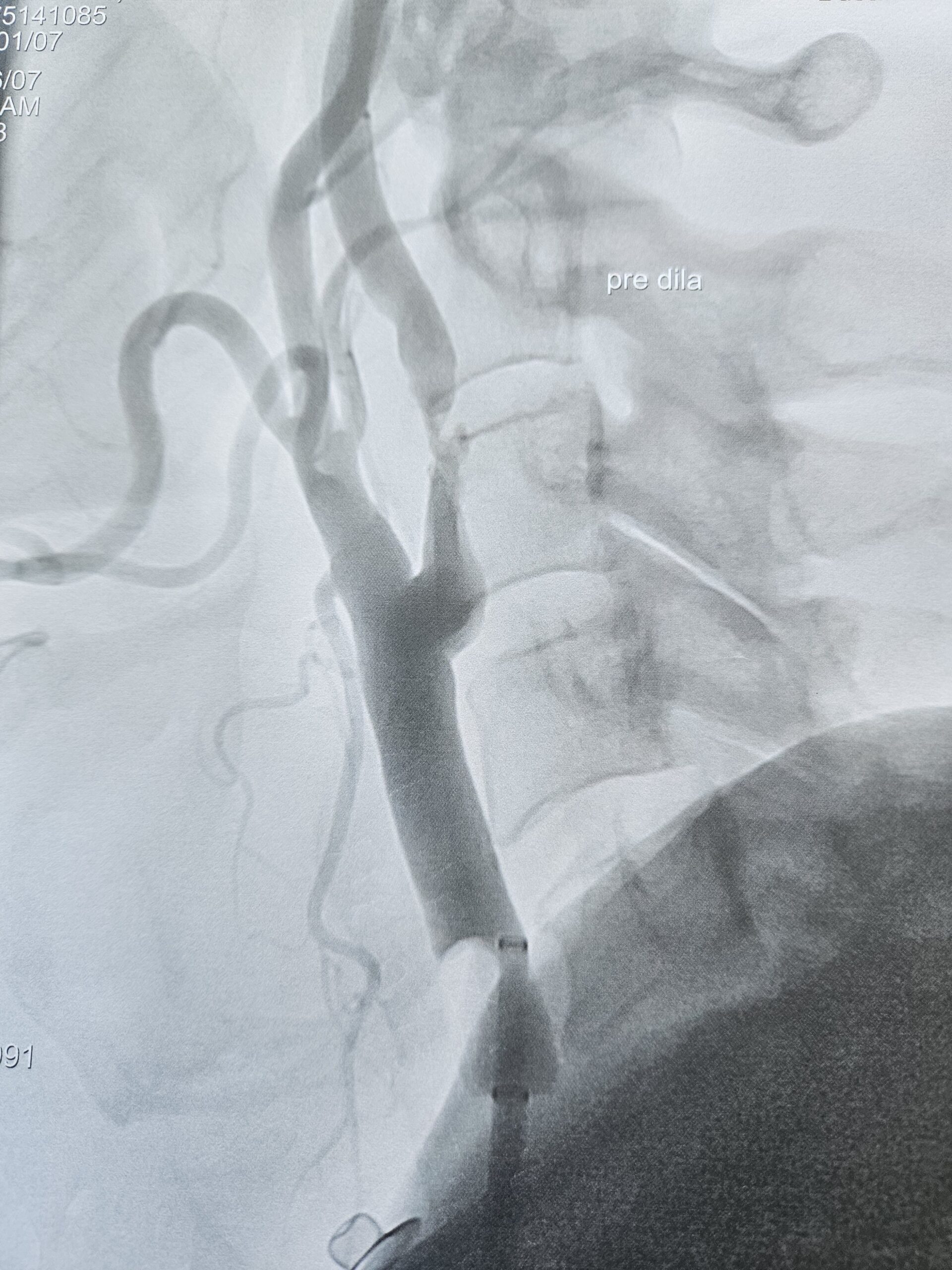
Before
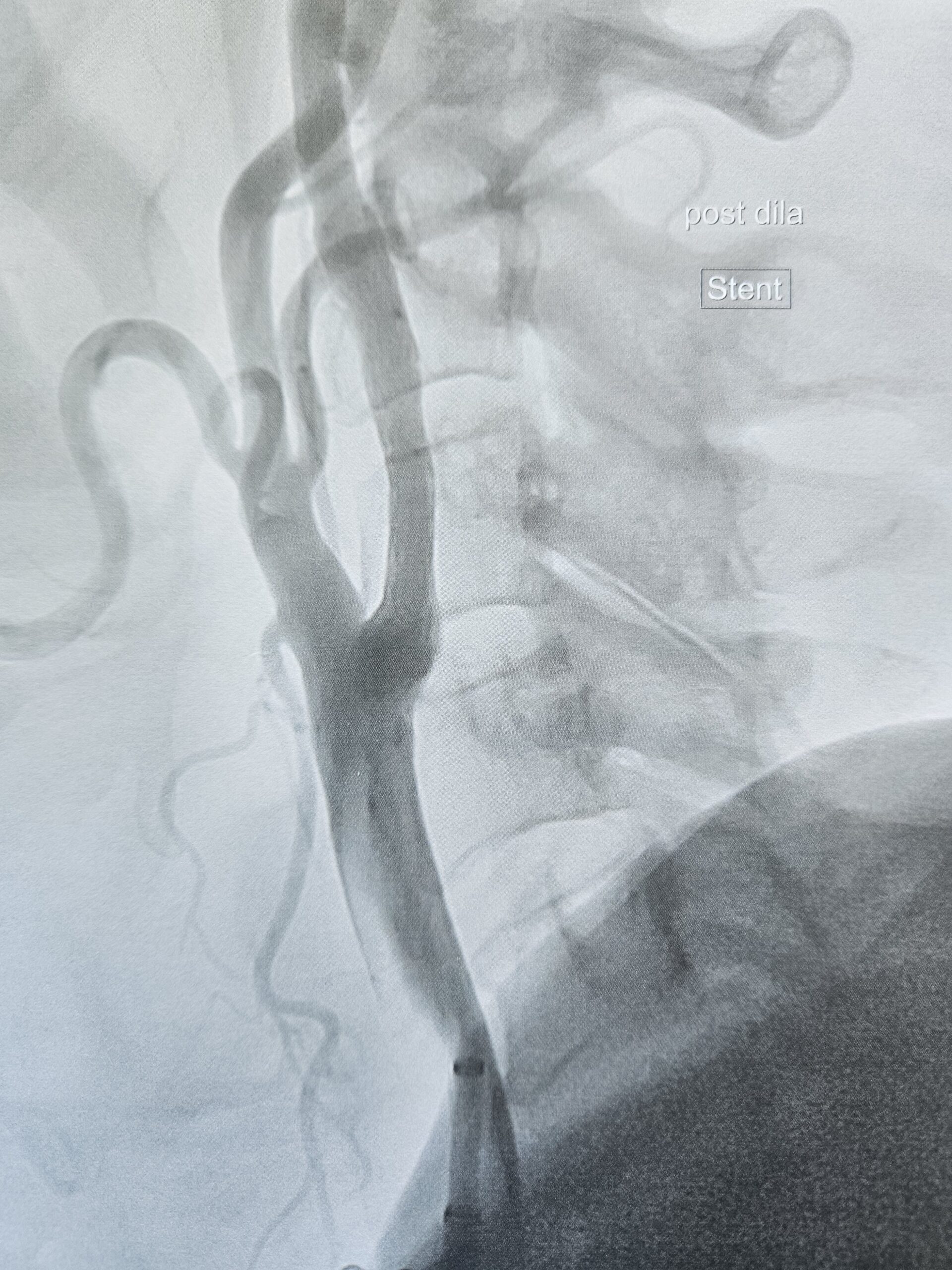
After


Preparation
Before an angioplasty, your cardiologist will run one or more of the following diagnostic tests:
- Ultrasound: A scanner moves around the carotid artery and captures images of the blockage and blood flow.
- Magnetic resonance angiography or MRA: Radio waves are used to produce images of the carotid artery and its blood flow.
- Carotid angiography: A contrast dye moves through a catheter into the carotid artery and highlights obstructions on an x-ray.
Your doctor will advise on what medications to take and what to expect before the procedure.
Procedure
- A sheath is inserted into the carotid artery After your sedation, the cardiologist makes a small cut in the femoral artery through which he guides a catheter with a balloon at its end into the blocked carotid artery. A carotid angioplasty serves as a guide for your doctor to reach the blockage easily.
You won’t feel any pain as the catheter moves through the arteries because the inside has no nerve endings.
- A special contrast dye moves through the catheter into the carotid artery. A contrast dye highlights the affected carotid artery and its blood flow to the brain on an x-ray.
- A filter (embolic protective device) is inserted into the carotid artery. A filter is placed further from the blockage to catch debris from the affected area.
- A surgical balloon is inflated into the carotid artery. A balloon at the edge of the catheter inflates to push plaque against the arterial wall and dilate the vessel.
- A tube mesh (stent) is inserted into the open vessel. A stent keeps the vessel open and, at times, is coated with a drug to reduce the risk of restenosis.
- The embolic protective device, small tube, catheter and balloon tip are taken out. Applying pressure at the incision site prevents excessive bleeding.
Recovery
Keeping still for a few hours minimises the risk of bleeding. Usually, you are discharged from the hospital within 24 hours after carotid artery stenting. Before you leave, to confirm the success of the procedure, your doctor performs an ultrasound of your carotid artery. You will need to arrange for a family member or friend to drive you home after placing the stent, as the anaesthetic effects are still working effectively at this time. Your doctor will advise you to stop exercising and lifting weights for at least 24 hours.
FAQ
- Discontinue smoking
- Keep cholesterol levels low.
- Exercise daily
- Ensure life-long care of chronic conditions such as diabetes and hypertension