
PROCEDURES

Left atrial appendage occlusion for atrial fibrillation
Overview
Atrial fibrillation is a rapid heartbeat (arrhythmia) causing blood clot formation in the heart, which increases stroke and heart failure. Atrial fibrillation works when the heart's top chambers (atria) function irregularly, remaining out of sync with the lower chambers (ventricles).
Why it’s performed
Left atrial appendage closure is a surgical procedure that seals the entrance of the left atrial appendage. The left atrial appendage is the shape of a windsock situated at the upper left-hand side of the heart. Similar to the appendix, the left atrial appendage has no definitive role, meaning you can live without it.
When suffering from atrial fibrillation and there is a disruption in the heartbeat due to irregular electrical activity, we recommend atrial appendage closure. When the heart beats, contracting, as usual, blood flows from the left atrium to the heart's lower chamber, the left ventricle. Because of atrial fibrillation, blood cannot leave the left atrium and therefore accumulates in the left atrial appendage, increasing the risk of stroke.
Blood thinners are particularly useful in treating atrial fibrillation but are not always suitable for all patients:
Implantation of left atrial appendage plug via femoral vein in patients with Atrial Fibrillation as an alternative to blood thinners:
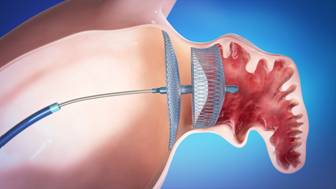

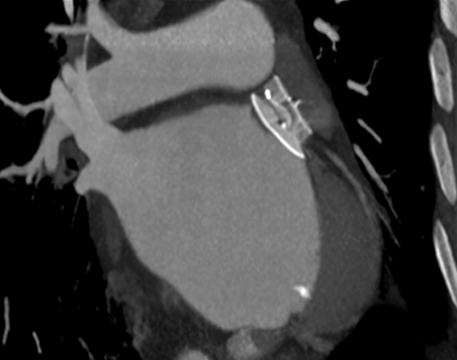
Left Atrial appendage plug post deployment occluding the appendage as seen on CT scan

Left atrial appendage deployed before release of retaining wire
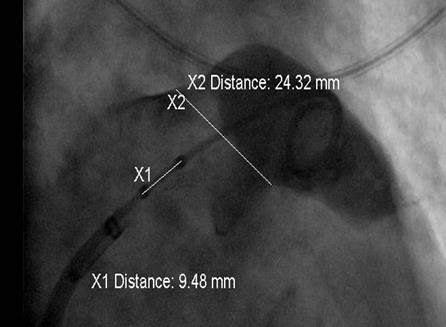
Left atrial appendage sizing

Preparation
Beforehand, you are required to undergo a transesophageal echocardiogram to ensure there is no clotting in the heart. Dr Abelson rules out blood clotting by studying images of the ultrasound taken prior to surgery.
In addition, fasting must begin six hours before surgery. This includes smoking and drinking that must be discontinued at the time.
Dr Abelson will also discuss chronic medication for diabetes as well as the use of blood thinners.
Left atrial appendage closure takes place under general anaesthetic. A catheter is inserted via the femoral vein, and access to the left atrium is obtained. Thereafter the left atrial appendage orifice is sealed off using a closure device.