
PROCEDURES

Trans-femoral aortic valve replacement (TAVI)
Overview
Trans-femoral aortic valve replacement (TAVR) is a procedure to treat a thick aortic valve by surgically replacing it.
Why it’s performed
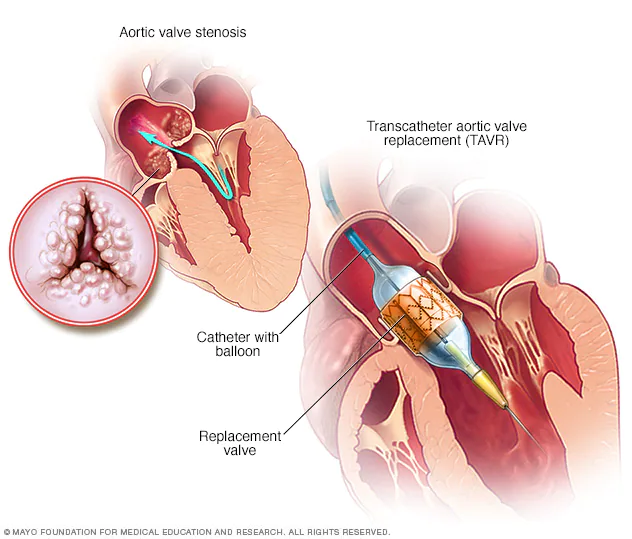
TAVR is performed to treat aortic valve stenosis whereby the heart’s valve cannot open entirely. When the heart’s valve does not open completely, blood flow is a mere trickle from the heart to the aorta and the rest of the body. As a result, the heart's valve becomes excessively thick and calcifies (stiffens). In this situation, we can either repair or replace the damaged valve.
Some patients with kidney and lung disease do not qualify for open-heart valve replacement surgery because these conditions increase the likelihood of risks following surgery.
Balloon deployed prosthetic aortic valve replacement via the femoral artery

Watch
Balloon deployed prosthetic aortic valve replacement via the femoral artery

Preparation
Strict guidelines are adhered to before aortic valve replacement surgery. At a preoperative consultation, Dr Abelson discusses chronic medication and what must be discontinued before TAVR.
He will also advise on when to fast prior to surgery and enquire about any allergies you have. In addition, on the day of surgery, we will insert an intravenous drip to medicate and sedate you.
Procedure
TAVR is a surgical procedure that entails replacing the damaged aortic valve with a natural graft (biological valve tissue) taken from a pig or cow heart. TAVR is far less invasive than open-heart surgery because it is carried out through tiny incisions using a catheter.
Dr Abelson inserts a catheter through an incision in the arm or groin, which he threads via the blood vessels into the heart. Images taken from an x-ray or echocardiogram serve as a guide to carry out this delicate procedure, particularly when placing the catheter in the right place. Next, he passes the natural valve tissue replacement through the catheter, which he guides to the aortic valve. Afterwards, the new, healthy valve is lifted in place by inflating the balloon at the catheter's tip. Finally, the catheter is removed once the valve is secured properly.
Recovery
Once the procedure is done, you spend the night in the intensive care ward for further monitoring. This is to ensure you respond well to treatment and give you time to recover without any disruption. Often, the surgery is such a success that most patients return home the day after TAVR.
You will be prescribed anticoagulants to prevent blood clot formation and antibiotics from minimising the risk of infection.